Monday, March 2, 2009


Saturday, February 21, 2009
Man with a hammer.../Man with a TiVo...
Typically, Christians are hawks when it comes to spotting the content of shows, movies, music, and other entertainments flowing from the steady stream of popular culture. The vehicle, or form, that transports such content (e.g. television, radio, computer, etc), however, tends to be overlooked. Cognizance of the form is perhaps just as important, maybe even more important given its insidious nature. As Marshall McLuhan famously said, "the medium is the message". In other words, the vehicles which supply our music, stories, and shows are teachers as well, conveying their own set of messages. Not just Desperate Housewives or 24, but television itself shapes our individual and corporate consciousnesses in profound ways.
Shedding light on the matter, sociologist Peter Berger explains the way society or culture impacts us, both corporately and individually, by employing a three-pronged dialectic: externalization, objectivation, and internalization. For Berger, externalization is the process whereby individuals create through both mental and physical labor. Having been created, things become distinct from the producer and begin to take on a life of their own (objectivation). It is at this point that they are used by individuals and begin to force their logic on the user (internalization)(for more on this see Berger's The Sacred Canopy). The thing produced has a way of shaping the user's mind. Someone has said that to a man with a hammer, everything becomes a nail. This gets at the idea. The tools we use shape the way we think. Here is another example: I have a TiVo which I love. Fast-forwarding and rewinding are my most proficient skills. Oddly enough, I often find myself wanting to rewind reality now that I have a become a sharpshooter with the remote (too much TV?). This is just one example of the way our tools (be it hammer or TiVo) impact our consciousness.
So what do we do with this? I think it is helpful in diagnosing problems we might otherwise overlook. For example, a content-only Christian mind might be elated that pornography is in no way included in his web-surfing; he's occupied with other, safer waves. What is neglected, though, is the massive amount of time spent on the web and the impact this has on his mental habits. Perhaps the disjointed nature of the web is creating difficulty in maintaining long, sustained meditation or reflection on a particular subject. David Lyon has said that the Internet’s openness and fluidity erodes authority structures because "it knows no priorities, respects no precedents, promotes no principles" (Jesus in Disneyland, 67). Maybe the Internet has bolstered his sense of autonomy, empowerment, and self-sufficiency by undermining any outside authority. This would impact the way he relates to God and neighbor. Finally, the Internet's bias toward efficient communication could conceivably hamper his non-web-based communication. His mind, saturated by the web, might be producing soggy communication and words.
This is not to say that the Internet should be avoided altogether (this is a blog after all). What I am suggesting is that Christian critique and concern extend beyond content to include form as well.
In addition to the books mentioned above, another book that has helped me on this issue is All God's Children and Blue Suede Shoes, by Ken Myers.
Shedding light on the matter, sociologist Peter Berger explains the way society or culture impacts us, both corporately and individually, by employing a three-pronged dialectic: externalization, objectivation, and internalization. For Berger, externalization is the process whereby individuals create through both mental and physical labor. Having been created, things become distinct from the producer and begin to take on a life of their own (objectivation). It is at this point that they are used by individuals and begin to force their logic on the user (internalization)(for more on this see Berger's The Sacred Canopy). The thing produced has a way of shaping the user's mind. Someone has said that to a man with a hammer, everything becomes a nail. This gets at the idea. The tools we use shape the way we think. Here is another example: I have a TiVo which I love. Fast-forwarding and rewinding are my most proficient skills. Oddly enough, I often find myself wanting to rewind reality now that I have a become a sharpshooter with the remote (too much TV?). This is just one example of the way our tools (be it hammer or TiVo) impact our consciousness.
So what do we do with this? I think it is helpful in diagnosing problems we might otherwise overlook. For example, a content-only Christian mind might be elated that pornography is in no way included in his web-surfing; he's occupied with other, safer waves. What is neglected, though, is the massive amount of time spent on the web and the impact this has on his mental habits. Perhaps the disjointed nature of the web is creating difficulty in maintaining long, sustained meditation or reflection on a particular subject. David Lyon has said that the Internet’s openness and fluidity erodes authority structures because "it knows no priorities, respects no precedents, promotes no principles" (Jesus in Disneyland, 67). Maybe the Internet has bolstered his sense of autonomy, empowerment, and self-sufficiency by undermining any outside authority. This would impact the way he relates to God and neighbor. Finally, the Internet's bias toward efficient communication could conceivably hamper his non-web-based communication. His mind, saturated by the web, might be producing soggy communication and words.
This is not to say that the Internet should be avoided altogether (this is a blog after all). What I am suggesting is that Christian critique and concern extend beyond content to include form as well.
In addition to the books mentioned above, another book that has helped me on this issue is All God's Children and Blue Suede Shoes, by Ken Myers.
Friday, February 6, 2009
Sin, a parasite
"Everything sin touches begins to die, but we do not focus on that. We see only the vitality of the parasite, glowing with stolen life." (from Not the Way It's Supposed to Be: A Breviary of Sin, by Cornelius Plantinga, Jr., 95)
"Blazing" pencils and God's grace
Gordon-Conwell New Testament professor, Sean McDonough, in classic McDonough fashion, describes what "blazing" pencils can teach us about grace and sanctification. Read here.
I will never look at a No. 2 in the same way.
I will never look at a No. 2 in the same way.
Wednesday, January 28, 2009
Monday, January 26, 2009
On sexual perversion
The NY Times recently reviewed Daniel Bergner's The Other Side of Desire, a book based on a series of conversations and interviews with the sexually perverted--although the book questions calling them perverted, and that is precisely the problem Douglas Groothuis has with the book and the review. Click here for Groothuis's analysis of the situation.
His conclusion:
America and the West is becoming increasingly perverted--and increasingly unable to even consider the category of moral perversion against any objective and God-given standard. We should have compassion for those twisted by abnormal desires and those defaced by aberrant behavior. They are made in God's image and should receive our love and concern. But we cannot bless the thing that perverts and pervades our culture: everything is relative; you cannot judge; you cannot offer objective, moral truth. May God have mercy on us and renew us again.
His conclusion:
America and the West is becoming increasingly perverted--and increasingly unable to even consider the category of moral perversion against any objective and God-given standard. We should have compassion for those twisted by abnormal desires and those defaced by aberrant behavior. They are made in God's image and should receive our love and concern. But we cannot bless the thing that perverts and pervades our culture: everything is relative; you cannot judge; you cannot offer objective, moral truth. May God have mercy on us and renew us again.
Monday, January 19, 2009
A convergence of contradictions: Obama's inauguration
Below I argued that the celebration of MLK Day and the anniversary of Roe v Wade in the very same week is ironic. Why? Because each day underscores America's difficulty to understand what exactly a human is. Whereas MLK Day trumpets progress, Roe v. Wade bellows regress. Our criteria for denying humanness has shifted from race to visibility, viability, and desirability.
Interestingly, these two days, MLK Day and Roe v Wade (Jan 22), are bridged by the inauguration of Barack Obama. This seems more than just happenstance, for the bundle of contradictions that these two days represent converge poignantly in the person of Barack Obama. On the one hand, Obama radiates the successes celebrated on MLK Day. Regardless of one's politics, Obama's inauguration is a monumental moment in American history. Tuesday will act as a reverberating echo of Monday's celebration. And yet, on the other hand, Obama's radical pro-abortion stance is a sobering reminder of the confusion that still remains.
Interestingly, these two days, MLK Day and Roe v Wade (Jan 22), are bridged by the inauguration of Barack Obama. This seems more than just happenstance, for the bundle of contradictions that these two days represent converge poignantly in the person of Barack Obama. On the one hand, Obama radiates the successes celebrated on MLK Day. Regardless of one's politics, Obama's inauguration is a monumental moment in American history. Tuesday will act as a reverberating echo of Monday's celebration. And yet, on the other hand, Obama's radical pro-abortion stance is a sobering reminder of the confusion that still remains.
Tuesday, January 13, 2009
What exactly is a human?
Putting aside the question of human nature (see below or here), there is an even more foundational question to ponder: what exactly is a human? It is a question this country has struggled to answer and two days next week underscore that struggle.
Monday is Martin Luther King Jr. Day, a day celebrating the steps made in racial equality. For much of our history blacks were not considered human but mere chattel property. The election of Barack Obama is a shining example of how far America has come in the race department.
Three days later will be the anniversary of the Roe v. Wade decision which legalized abortion. Whereas skin tone decided whether or not one was human for the first two-hundred years of American history, now it a different set of factors. Here are three: visibility, viability, and desirability.
1) Can we see you? (visibility)
2) Can you survive outside your mother's womb? (viability)
3) Do your parents choose you? (desirability)
If not, then "life, liberty, and the pursuit of happiness" do not apply.
That these two days fall in the same week is a curious irony. One day celebrates a step in the right direction, the other day is a reminder that we still arbitrarily deny humanness to those we deem different. What is consistent in both cases is this: If there is power to be gained, the powerful will trample the helpless for gain. In the case of slavery, blacks were exploited for the purpose of personal wealth. In the case of abortion, unborn humans are killed for the purpose of personal autonomy.
(additional note: I do not want to be blithe about the trauma that accompanies women considering abortion. Those of us opposing abortion must lovingly apply the same concern for the unborn to their hurting mothers.)
Monday is Martin Luther King Jr. Day, a day celebrating the steps made in racial equality. For much of our history blacks were not considered human but mere chattel property. The election of Barack Obama is a shining example of how far America has come in the race department.
Three days later will be the anniversary of the Roe v. Wade decision which legalized abortion. Whereas skin tone decided whether or not one was human for the first two-hundred years of American history, now it a different set of factors. Here are three: visibility, viability, and desirability.
1) Can we see you? (visibility)
2) Can you survive outside your mother's womb? (viability)
3) Do your parents choose you? (desirability)
If not, then "life, liberty, and the pursuit of happiness" do not apply.
That these two days fall in the same week is a curious irony. One day celebrates a step in the right direction, the other day is a reminder that we still arbitrarily deny humanness to those we deem different. What is consistent in both cases is this: If there is power to be gained, the powerful will trample the helpless for gain. In the case of slavery, blacks were exploited for the purpose of personal wealth. In the case of abortion, unborn humans are killed for the purpose of personal autonomy.
(additional note: I do not want to be blithe about the trauma that accompanies women considering abortion. Those of us opposing abortion must lovingly apply the same concern for the unborn to their hurting mothers.)
Saturday, January 10, 2009
Of note
1. Is viewing porn adultery? Ross Douthat explores the question here.
2. Click here for a story on the edgy and orthodox Mark Driscoll in the NY Times. (HT: BTW)
3. Douglas Groothuis lecture on natural law.
2. Click here for a story on the edgy and orthodox Mark Driscoll in the NY Times. (HT: BTW)
3. Douglas Groothuis lecture on natural law.
Monday, January 5, 2009
A Perplexing Conundrum
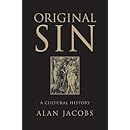
Humans have tended to vacillate on what exactly our condition is.
Are we, humans, good or bad? Beautiful or ugly? Whole or broken?
Alan Jacobs's Original Sin tracks thinking on these questions by looking at the acceptance and resistance to the notion of original sin, a doctrine with profound implications. A ways into the book Jacobs says,
Our story so far has inscribed a clear pattern. From time to time in Western history, a vision of the greatness of human moral potential emerges or arises, only to find an immediate counter in an equally potent and vivid picture of human bondage to the sin we all inherit from Adam. (127)
And later Jacobs writes, "A Pelagius rises up only to be met by an Augustine" (128).
That we so easily flounder between these different views of humanity is interesting. The intrinsic worth, value, and beauty of the human makes it hard to believe that we are hideous rebels, inciting the wrath of holy God. And yet, on the other hand, hideous rebels we are! All of our actions are tethered tightly to our own self-absorbed hearts; we crush the weak, schmooze the strong. Even our "good" deeds are often done with an eye to self-glory.
Given the plausibility of either view, does not the biblical account give us the most robust explanation for this conundrum? We are the climax of God's creative work as described in Genesis, beings created in the image of God. And yet we are severely marred, a tragedy described in the biblical account of the Fall.
Saturday, January 3, 2009
D. A. Carson interview
Recently, Mark Driscoll interviewed D. A. Carson. Having read several books by Carson, it was good to learn more about the person himself. Also, drawing upon his dad, Carson mentions some of the "sins of old men," sins which also happen to beset younger men. All in all, a good interview.
For some reason I could not embed the video. Find the interview here.
HT: Between Two Worlds
For some reason I could not embed the video. Find the interview here.
HT: Between Two Worlds
Friday, January 2, 2009
"Beyond Our Differences"
Bill Moyers Journal aired a documentary on religion entitled "Beyond Our Differences." The film operated from the assumption that all religions have a large degree of commonality and, therefore, we must move "beyond our differences." This religious pluralism is widespread and it is assumed to be the more hospitable approach to religion in a religiously diverse context, particularly given the recent (and not so recent) violence done in the name of religion. In fact, the film was largely a response to this violence.
In the film, Deepak Chopra calls "dogma" and "ideology" the great problems for religion (never mind that this is a dogma itself). These dogmas and ideologies lead to the divisive "my-God-is-better-than-your-God" sort of thinking, says Chopra. At a glance, Chopra's familiar refrain sounds open-minded, peace-inducing, and humble. But there are problems. For starters, all interviewees shared Chopra's assumption on religion. The film did not contain one interviewee who was at variance with Chopra's pluralistic impulse. Sure, there were a range of religions represented (Buddhists, Muslims, Christians, Jews, etc.) but all the adherents were operating from assumptions similar to Chopra. Despite the appearance of diversity, the interviewees were glaringly homogeneous in their religious pluralism. As a result, a significant portion of religious adherents, namely, those believing in some sort of exclusive religious claims, were cut-off from the conversation. A more fruitful discussion would have included religious practitioners that do not presuppose that there are a number of valid paths (Buddhism, Christianity, Judaism, Islam, Sikhism, etc.) to the divine.
Even worse, though, is the religious imperialism inherent in the film. Not only were those maintaining exclusive claims about religion not allowed a voice in the conversation but their views end up being revised by Chopra and others in the film. In the film's relentless effort to maintain religious inclusiveness, it ends up importing its own faith assumptions into the various religions represented. In the film Christianity, for example, is said to be a religion that is just as valid as Buddhism. Many Christians disagree, and for good reasons! To completely neglect those reasons and represent Christianity in this manner is to invade and exploit Christianity to serve one's own idea of what God is like. At the very least, those maintaining more exclusive faith positions are less inclined to tinker with other religions in order to make them fit their preconceived understandings of the divine.
In the end, the film fails to get "beyond our differences" for two interrelated reasons. First, the film stifled diversity because of the homogeneity of the interviewees; they all shared the religious pluralistic inclination. Second, because of the interviewees presuppositional pluralism the film glossed over crucial doctrinal differences between the world's faiths. As a result, any "differences" discussed in the film remained superficial.
The issues discussed in this film are important for Christians to grapple with. With regards to religious pluralism, I have been helped by Tim Keller, Lesslie Newbigin, and Tim Tennent. Also helpful is Stand to Reason. Finally, I have dealt with how our cultural context makes it difficult to maintain the exclusivity of Jesus in a previous post.
In the film, Deepak Chopra calls "dogma" and "ideology" the great problems for religion (never mind that this is a dogma itself). These dogmas and ideologies lead to the divisive "my-God-is-better-than-your-God" sort of thinking, says Chopra. At a glance, Chopra's familiar refrain sounds open-minded, peace-inducing, and humble. But there are problems. For starters, all interviewees shared Chopra's assumption on religion. The film did not contain one interviewee who was at variance with Chopra's pluralistic impulse. Sure, there were a range of religions represented (Buddhists, Muslims, Christians, Jews, etc.) but all the adherents were operating from assumptions similar to Chopra. Despite the appearance of diversity, the interviewees were glaringly homogeneous in their religious pluralism. As a result, a significant portion of religious adherents, namely, those believing in some sort of exclusive religious claims, were cut-off from the conversation. A more fruitful discussion would have included religious practitioners that do not presuppose that there are a number of valid paths (Buddhism, Christianity, Judaism, Islam, Sikhism, etc.) to the divine.
Even worse, though, is the religious imperialism inherent in the film. Not only were those maintaining exclusive claims about religion not allowed a voice in the conversation but their views end up being revised by Chopra and others in the film. In the film's relentless effort to maintain religious inclusiveness, it ends up importing its own faith assumptions into the various religions represented. In the film Christianity, for example, is said to be a religion that is just as valid as Buddhism. Many Christians disagree, and for good reasons! To completely neglect those reasons and represent Christianity in this manner is to invade and exploit Christianity to serve one's own idea of what God is like. At the very least, those maintaining more exclusive faith positions are less inclined to tinker with other religions in order to make them fit their preconceived understandings of the divine.
In the end, the film fails to get "beyond our differences" for two interrelated reasons. First, the film stifled diversity because of the homogeneity of the interviewees; they all shared the religious pluralistic inclination. Second, because of the interviewees presuppositional pluralism the film glossed over crucial doctrinal differences between the world's faiths. As a result, any "differences" discussed in the film remained superficial.
The issues discussed in this film are important for Christians to grapple with. With regards to religious pluralism, I have been helped by Tim Keller, Lesslie Newbigin, and Tim Tennent. Also helpful is Stand to Reason. Finally, I have dealt with how our cultural context makes it difficult to maintain the exclusivity of Jesus in a previous post.
Subscribe to:
Posts (Atom)

 Posts
Posts

